
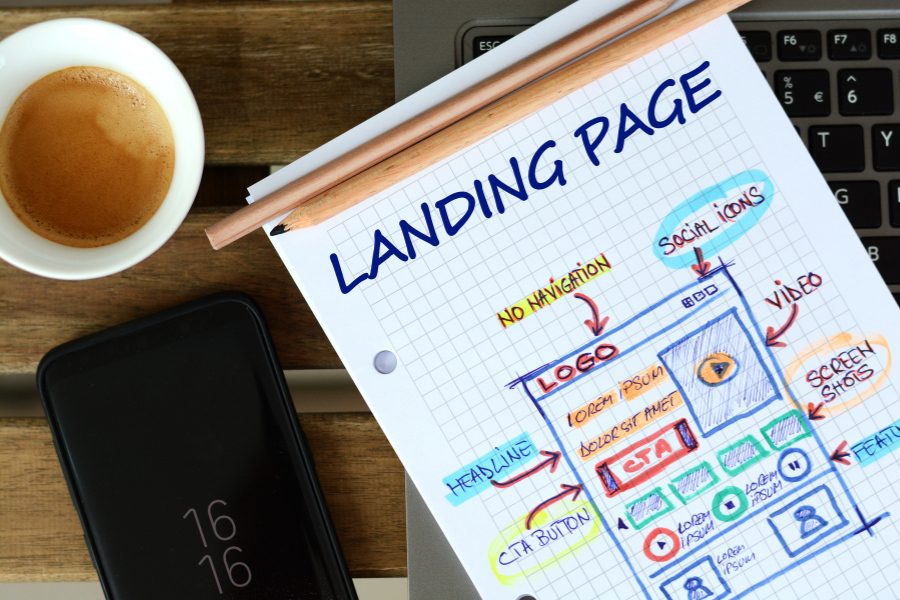
In digital marketing, the gap between a campaign that converts and one that burns budget often comes down to a single factor: your landing page design. You can craft the perfect ad copy, target the right audience, and optimize your bid strategy, but if visitors land on a poorly designed page, they’ll bounce faster than you can say “conversion rate.”
Understanding the Landing Page’s Role in Your Marketing Ecosystem
Before diving into specific design elements, it’s crucial to understand that your landing page is not just another webpage—it’s a conversion-focused destination with a singular purpose. Unlike your homepage or service pages, a landing page exists to convert one specific audience segment from one specific campaign. This focused intent requires design decisions that eliminate distractions and guide visitors toward a single action.
Landing pages play a critical role in paid advertising performance, especially when campaigns are designed around a single conversion goal. A deeper look at the role of landing pages in PPC success highlights how focused design and messaging directly influence click-through rates, quality scores, and overall ROI.
Think of your landing page as the digital equivalent of a retail store’s checkout counter. Everything that happens before—the marketing, the ad click, the initial interest—is just bringing customers to this critical moment. The design of this space determines whether they complete the transaction or walk away. This is why professional website development treats landing pages as specialized conversion tools rather than standard web pages.
1. The First Impression Problem
Your landing page has approximately 3-5 seconds to convince a visitor they’re in the right place. During that critical window, design speaks louder than words. A cluttered layout, confusing navigation, or mismatched messaging creates immediate friction, causing potential customers to hit the back button and cost you valuable ad spend.
The psychology is simple: people make snap judgments about credibility based on visual design. A professional, polished landing page signals trustworthiness, while a dated or chaotic design raises red flags about your business, regardless of how legitimate your offering actually is.
2. Alignment Between Ad and Landing Page
One of the most common campaign killers is message mismatch. When someone clicks an ad promising a “free consultation,” they expect to land on a page that delivers exactly that, not a generic homepage or a page buried three clicks deep in your site navigation.
Strong landing page design creates seamless continuity from ad to action. The headline reinforces the ad promise, the visuals match the campaign aesthetic, and the call-to-action is immediately visible. This consistency reduces cognitive load and builds confidence that the visitor is on the right path.
3. Visual Hierarchy Guides Action
Effective landing page design uses visual hierarchy to guide visitors toward conversion. Your most important elements should dominate the page through size, color, contrast, and positioning. The human eye naturally follows patterns, and strategic design leverages this to create a clear path from headline to conversion. Following proven principles can significantly improve how users interact with your page. Applying landing page best practices that turn visitors into customers ensures your layout, calls-to-action, and form design work together to reduce friction and increase conversions.
Consider how whitespace, typography, and layout work together to direct attention. A well-designed landing page doesn’t make visitors hunt for information or guess what to do next. The design itself becomes a silent salesperson, anticipating questions and removing obstacles before they arise.
4. Mobile Responsiveness Is Non-Negotiable
With mobile traffic accounting for more than half of web visits, a landing page that doesn’t perform flawlessly on smartphones is essentially throwing money away. Mobile-responsive design isn’t just about shrinking desktop layouts—it requires rethinking the entire user experience for smaller screens and touch interactions.
Fast loading times become even more critical on mobile, where connection speeds vary and patience runs thin. Images need to be optimized, forms need to be simplified, and buttons need to be thumb-friendly. A mobile-optimized landing page can dramatically improve campaign performance, especially for local businesses targeting on-the-go consumers.
5. Trust Signals and Social Proof
Design elements that build credibility can significantly impact conversion rates. Strategic placement of trust badges, customer testimonials, case study highlights, and security certifications reassures visitors that they’re making a safe decision.
The design must make these trust signals prominent without cluttering the page. Testimonials with real photos, recognizable client logos, and specific results carry more weight than generic stock imagery. The way you present social proof matters as much as the proof itself.
6. Form Design and Conversion Friction
Every form field represents potential friction. Landing page design must balance information gathering with user convenience. A form that asks for too much information creates abandonment, while thoughtful design can make even longer forms feel manageable through progressive disclosure, smart formatting, and clear value propositions.
Visual cues like field validation, helpful error messages, and progress indicators reduce anxiety during the conversion process. The design should make completing the form feel like a natural next step rather than an interrogation.
7. Speed and Performance
Page load speed directly impacts both user experience and ad quality scores. A landing page that takes more than three seconds to load will lose a significant portion of visitors before they even see your carefully crafted message.
Optimized images, clean code, and efficient hosting all contribute to pages that look great and load fast, maximizing the return on every ad dollar spent.
8. A/B Testing Requires Good Design Foundation
Testing different landing page variations is essential for optimization, but you need a solid design foundation to test meaningful variables. Small tweaks to button color or headline placement won’t save a fundamentally flawed page layout.
Strong landing page design provides a stable platform for iterative improvements. When you have clear visual hierarchy, proper mobile responsiveness, and strategic information architecture, you can focus testing efforts on optimizing elements that actually move the needle rather than fixing basic design problems.
The Bottom Line
Your landing page is where marketing strategy meets user experience, and design is the bridge between them. Campaigns with strategically designed landing pages consistently outperform those that treat the landing page as an afterthought.
The most effective approach combines compelling copy with thoughtful design, creating pages that not only attract clicks but convert them into customers. When design and content work in harmony, guided by user psychology and supported by solid development practices, your campaigns achieve the results that justify the investment.
Whether you’re launching a new campaign or wondering why current efforts underperform, take a hard look at your landing page design. It might be the difference between campaign success and wasted ad spend.
Transform Your Campaign Performance with Space Creative Agency
At Space Creative Agency, we specialize in creating high-converting landing pages that turn your ad spend into measurable results. Our team combines strategic design thinking with user psychology to build landing pages that don’t just look great—they perform. From initial concept to final optimization, we ensure every element of your landing page works toward a single goal: conversion.
Ready to stop wasting ad budget on underperforming landing pages? Let’s build something that actually converts. Contact Space Creative Agency today to discuss how we can elevate your campaign performance through strategic landing page design.